
Telemedicine: Transforming Healthcare in the Digital Age
What Is Telemedicine?
Definition and Core Concepts
Telemedicine might sound like one of those buzzwords that gets thrown around in tech conversations, but at its core, it’s actually pretty simple—and incredibly impactful. Imagine being able to consult a doctor without stepping out of your home, skipping long waiting rooms, and avoiding unnecessary travel. That’s essentially what telemedicine brings to the table. It refers to the use of digital communication technologies—like smartphones, computers, and video conferencing tools—to deliver healthcare services remotely. Instead of physically visiting a clinic, patients can connect with healthcare providers in real time or even asynchronously, depending on their needs.
What makes telemedicine especially powerful is how it bridges the gap between patients and providers, particularly in areas where access to healthcare is limited. Rural communities, for instance, often struggle with a shortage of specialists. Telemedicine changes that equation by allowing patients to consult experts hundreds or even thousands of miles away. It’s like shrinking the map and putting healthcare within arm’s reach.
Another key concept tied to telemedicine is patient-centered care. By giving individuals more control over when and how they seek medical attention, telemedicine aligns with modern expectations of convenience and flexibility. It’s healthcare that adapts to your life, rather than forcing you to adapt to it. And let’s be honest—who wouldn’t prefer discussing a minor health concern from the comfort of their couch rather than sitting in a crowded waiting room?
Telemedicine isn’t just a temporary trend or a pandemic-era solution; it’s a fundamental shift in how healthcare is delivered. With the rapid advancement of technology and growing demand for accessible care, it’s becoming a cornerstone of modern medicine.
Evolution of Telemedicine Over Time
Telemedicine didn’t just pop up overnight with the rise of smartphones and Zoom calls. Its roots actually stretch back several decades, evolving alongside technological advancements in fascinating ways. Back in the 1960s, NASA played a surprising role in early telemedicine development. They needed a way to monitor astronauts’ health in space, so they began experimenting with remote medical data transmission. At the same time, hospitals started using basic video links to connect with patients in remote areas.
Fast forward to the 1990s, and the internet began to reshape everything. Suddenly, it became possible to send medical records, images, and even emails between patients and doctors. While the technology was still limited compared to today’s standards, it laid the groundwork for more sophisticated telehealth systems. As broadband internet became more widespread in the early 2000s, telemedicine started gaining traction, especially in specialized fields like radiology and dermatology.
Then came the real turning point: the COVID-19 pandemic. Practically overnight, telemedicine went from being a niche service to a mainstream necessity. According to industry reports, telehealth usage increased by over 1500% in some regions during 2020, highlighting just how quickly both patients and providers adapted. Regulations were relaxed, insurance coverage expanded, and healthcare systems rapidly scaled their digital capabilities.
Today, telemedicine continues to evolve at an incredible pace. With the integration of artificial intelligence, wearable devices, and mobile health apps, it’s no longer just about video calls—it’s about creating a fully connected healthcare ecosystem. Looking back, it’s clear that telemedicine’s journey has been shaped by both necessity and innovation, and it shows no signs of slowing down.
How Telemedicine Works
Technologies Behind Telemedicine
At first glance, telemedicine might seem like magic—how can a doctor diagnose and treat you without being physically present? But behind the scenes, it’s powered by a sophisticated network of technologies working seamlessly together. Think of it as a digital bridge connecting patients and healthcare providers in real time or through stored data.
The most visible component is video conferencing technology. Platforms specifically designed for healthcare, such as HIPAA-compliant systems, ensure that patient information remains secure while enabling face-to-face interaction. These platforms often include features like screen sharing, digital prescriptions, and integrated medical records, making virtual visits surprisingly comprehensive.
Beyond video calls, there’s a whole ecosystem of tools supporting telemedicine. Electronic Health Records (EHRs) play a crucial role by storing patient data that doctors can access instantly during consultations. This ensures continuity of care, even if the patient and provider are miles apart. Then there are mobile health apps, which allow patients to track symptoms, schedule appointments, and communicate with their healthcare providers.
One of the most exciting aspects is the use of remote monitoring devices. Wearables like smartwatches can track heart rate, oxygen levels, sleep patterns, and even detect irregular heart rhythms. These devices send real-time data to healthcare providers, enabling proactive care rather than reactive treatment. It’s like having a mini health monitor on your wrist, constantly feeding valuable insights to your doctor.
Cloud computing also plays a huge role by enabling secure storage and sharing of medical data. Without it, telemedicine wouldn’t be able to scale the way it has. Add artificial intelligence into the mix—helping with diagnostics, triage, and patient management—and you start to see how telemedicine is more than just a convenience; it’s a technological revolution reshaping healthcare delivery.
Types of Telemedicine Services
Telemedicine isn’t a one-size-fits-all solution—it comes in several forms, each designed to address different healthcare needs. Understanding these types can help you see just how versatile and adaptable this approach really is.
The most common type is real-time telemedicine, also known as synchronous telemedicine. This involves live interaction between a patient and a healthcare provider through video or phone calls. It’s the closest thing to an in-person visit and is often used for consultations, follow-ups, and even some urgent care situations. You can ask questions, describe symptoms, and get immediate feedback, just like you would in a traditional clinic setting.
Then there’s store-and-forward telemedicine, which takes a different approach. Instead of real-time communication, patients or healthcare providers send medical data—such as images, test results, or recorded videos—to a specialist for later review. This is particularly useful in fields like dermatology, where a doctor can analyze skin conditions through high-quality images without needing a live consultation.
Remote patient monitoring is another key category. This involves continuous tracking of a patient’s health data using connected devices. For example, someone with diabetes might use a glucose monitor that sends readings directly to their doctor. This allows for ongoing management of chronic conditions without frequent clinic visits.
Synchronous vs Asynchronous Care
The distinction between synchronous and asynchronous telemedicine is more important than it might seem. Synchronous care is all about immediacy—it’s ideal when you need quick answers or real-time interaction. On the other hand, asynchronous care offers flexibility, allowing both patients and providers to communicate on their own schedules.
Think of synchronous care as a live conversation, like a phone call, while asynchronous care is more like sending an email or a message. Both have their place, and together they create a comprehensive telemedicine ecosystem that can cater to a wide range of healthcare needs.
Benefits of Telemedicine
Convenience and Accessibility
If there’s one thing that truly sets telemedicine apart, it’s how incredibly convenient it makes healthcare. Think about the traditional experience—booking an appointment weeks in advance, commuting through traffic, sitting in a waiting room, and then finally getting a few minutes with your doctor. Telemedicine flips that entire experience on its head. With just a smartphone or laptop, you can connect with a healthcare provider from your home, your office, or even while traveling. It’s healthcare that fits into your schedule rather than disrupting it.
This convenience isn’t just about comfort; it’s about access. Millions of people around the world live in rural or underserved areas where healthcare facilities are limited or located far away. Telemedicine eliminates that geographical barrier. A patient in a remote village can now consult a specialist in a major city without spending hours—or even days—traveling. According to recent healthcare reports, telemedicine has improved access to care for over 60% of rural patients in certain regions, highlighting its transformative potential.
It also makes a huge difference for individuals with mobility challenges, chronic illnesses, or demanding work schedules. Parents no longer need to take a full day off to bring their child to a routine check-up. Elderly patients can receive care without the physical strain of travel. Even for minor issues like a cold or skin rash, telemedicine provides a quick and efficient solution.
There’s also a psychological layer to consider. Many people feel more comfortable discussing sensitive health issues from the privacy of their own space. This can lead to more open communication and, ultimately, better care. Telemedicine isn’t just about saving time—it’s about removing friction from the entire healthcare experience and making it more human-centered.
Cost-Effectiveness
Healthcare costs can be overwhelming, and this is where telemedicine quietly becomes a financial game-changer. While it might not eliminate all medical expenses, it significantly reduces many of the hidden costs associated with traditional healthcare. Think about travel expenses, parking fees, time off work, and even childcare—these costs add up quickly. Telemedicine cuts most of them out of the equation.
From a provider’s perspective, telemedicine also reduces operational costs. Clinics can handle more patients without needing larger physical spaces or additional staff. These savings often translate into lower consultation fees for patients. In fact, studies have shown that telemedicine visits can cost 20% to 50% less than in-person visits, depending on the service and location.
Insurance companies are increasingly recognizing these benefits as well. Many now cover telehealth services, especially after the surge in demand during the pandemic. This shift has made telemedicine even more accessible to a broader population. For patients managing chronic conditions, the savings can be substantial over time. Regular virtual check-ins reduce the need for expensive emergency visits or hospitalizations.
There’s also a broader economic impact. By making healthcare more efficient, telemedicine helps reduce strain on healthcare systems. Hospitals can focus resources on critical cases while handling routine consultations remotely. It’s like optimizing a busy highway by adding an express lane—everything moves more smoothly.
Cost-effectiveness doesn’t mean compromising on quality. In many cases, telemedicine delivers the same level of care at a fraction of the cost, making it a practical solution for both patients and providers.
Improved Patient Outcomes
At the end of the day, healthcare isn’t just about convenience or cost—it’s about results. And this is where telemedicine proves its real value. By enabling faster access to care, telemedicine often leads to earlier diagnosis and treatment. When patients can consult a doctor quickly, they’re less likely to ignore symptoms or delay seeking help.
One of the biggest advantages lies in continuous care. With remote monitoring tools and regular virtual check-ins, doctors can keep a closer eye on patients with chronic conditions like diabetes, hypertension, or heart disease. Instead of waiting for a problem to escalate, healthcare providers can intervene early. This proactive approach has been shown to reduce hospital readmissions by up to 30% in some cases.
Telemedicine also improves medication adherence. Patients are more likely to follow treatment plans when they have easy access to their healthcare providers for questions and follow-ups. It creates an ongoing relationship rather than a series of disconnected visits.
Another often overlooked benefit is patient engagement. Telemedicine encourages individuals to take a more active role in their health. With access to digital tools, health data, and direct communication channels, patients become partners in their own care. This shift in mindset can have a powerful impact on long-term health outcomes.
Ultimately, telemedicine doesn’t just change how care is delivered—it enhances the quality of care itself. By making healthcare more accessible, consistent, and personalized, it helps patients achieve better results and maintain healthier lives.
Challenges and Limitations of Telemedicine
Technical Barriers
As impressive as telemedicine is, it’s not without its hurdles. One of the biggest challenges lies in the technology itself. While many people have access to smartphones and internet connections, not everyone enjoys reliable or high-speed connectivity. In rural or low-income areas, poor internet infrastructure can make video consultations frustrating or even impossible.
There’s also the issue of digital literacy. Not everyone is comfortable navigating apps, uploading medical documents, or troubleshooting technical glitches. For older adults, in particular, the learning curve can be steep. Imagine trying to explain your symptoms while also figuring out why your microphone isn’t working—it’s not exactly ideal.
Healthcare providers face their own technical challenges as well. Implementing telemedicine systems requires investment in secure platforms, staff training, and ongoing maintenance. Smaller clinics may struggle to keep up with these demands, creating a gap between large, well-funded institutions and smaller practices.
Even when the technology works perfectly, it has limitations. Certain medical examinations simply can’t be performed remotely. A doctor can’t physically examine your abdomen or listen to your lungs through a screen—at least not yet. While remote devices are improving, they’re not a complete substitute for in-person care.
These technical barriers don’t make telemedicine ineffective, but they do highlight the importance of infrastructure and education. Bridging this digital divide is essential for ensuring that telemedicine benefits everyone, not just those with access to the latest technology.
Privacy and Security Concerns
When it comes to healthcare, privacy isn’t just important—it’s non-negotiable. Telemedicine relies heavily on digital platforms, which naturally raises concerns about data security. Patients are sharing sensitive medical information online, and any breach could have serious consequences.
Healthcare providers must comply with strict regulations, such as HIPAA in the United States, to protect patient data. This means using encrypted communication channels, secure storage systems, and robust authentication processes. However, not all platforms are created equal. Using non-secure video conferencing tools can expose patient information to potential risks.
Cybersecurity threats are another growing concern. As telemedicine becomes more widespread, it becomes a more attractive target for hackers. Data breaches, ransomware attacks, and unauthorized access are real risks that healthcare organizations must actively guard against.
From the patient’s perspective, there’s also the issue of trust. People need to feel confident that their information is safe before they fully embrace telemedicine. A single high-profile breach can damage that trust and slow adoption.
Despite these concerns, advancements in cybersecurity are helping to strengthen telemedicine systems. Encryption, multi-factor authentication, and blockchain-based solutions are being explored to enhance data protection. The key lies in balancing accessibility with security—making telemedicine easy to use without compromising privacy.
Regulatory and Licensing Issues
Healthcare is a highly regulated industry, and telemedicine adds an extra layer of complexity. One of the biggest challenges is licensing. In many countries, doctors are required to be licensed in the state or region where the patient is located. This can limit the ability of healthcare providers to offer services across borders.
During the COVID-19 pandemic, many of these regulations were temporarily relaxed to expand access to care. However, as things return to normal, there’s ongoing debate about how to handle licensing in a telemedicine-driven world. Should a doctor in one state be allowed to treat a patient in another? It sounds simple, but it involves legal, ethical, and logistical considerations.
Reimbursement policies are another sticking point. While insurance coverage for telemedicine has improved, it’s not always consistent. Some services may be covered, while others are not, creating confusion for both patients and providers.
There’s also the challenge of standardization. Different regions may have different guidelines for telemedicine practices, making it difficult to create a unified system. This lack of consistency can slow down adoption and innovation.
Addressing these regulatory issues requires collaboration between governments, healthcare organizations, and technology providers. As telemedicine continues to grow, creating clear and flexible policies will be essential for unlocking its full potential.
Telemedicine in Different Medical Fields
Primary Care
When people first think about telemedicine, primary care is usually the first area that comes to mind—and for good reason. It’s where telemedicine feels the most natural and immediately useful. Imagine waking up with a sore throat, mild fever, or a persistent cough. Instead of debating whether it’s “serious enough” to justify a clinic visit, you can simply open an app, schedule a virtual consultation, and speak with a doctor within minutes. That kind of accessibility changes how people approach everyday health concerns.
Primary care via telemedicine works particularly well for routine consultations, follow-ups, and preventive care. Doctors can review symptoms, recommend treatments, prescribe medications, and even guide patients through basic self-examinations. For example, a physician might ask you to check your pulse, press on certain areas, or describe visible symptoms. While it may not replace every in-person visit, it handles a significant portion of common healthcare needs.
Another major advantage is continuity of care. Patients can stay connected with their primary care providers more consistently, rather than waiting months between visits. This ongoing interaction helps build stronger doctor-patient relationships, even in a virtual setting. It also allows for better tracking of health trends over time, which is essential for early detection of potential issues.
Telemedicine in primary care also reduces the burden on overcrowded clinics and emergency rooms. By diverting non-urgent cases to virtual platforms, healthcare systems can allocate resources more effectively. It’s like creating a smart filter that ensures patients get the right level of care at the right time.
That said, it’s not a complete replacement. Physical exams, lab tests, and certain diagnostic procedures still require in-person visits. But as a first point of contact, telemedicine is redefining primary care by making it faster, more flexible, and far more accessible than ever before.
Mental Health Services
If there’s one field where telemedicine has truly revolutionized care, it’s mental health services. Therapy and counseling are inherently conversational, which makes them perfectly suited for virtual platforms. In fact, many patients find it easier to open up when they’re in a familiar environment rather than sitting in a clinical office.
Teletherapy has seen explosive growth in recent years. Reports suggest that virtual mental health visits increased by over 300% during the pandemic, and the momentum hasn’t slowed down. Platforms offering video, phone, and even text-based therapy have made mental health support more accessible than ever before.
One of the biggest barriers to mental health care has always been stigma. Telemedicine helps break that barrier by offering a level of privacy and discretion that traditional settings can’t always provide. There’s no waiting room, no chance of running into someone you know—just a direct, personal connection with a therapist.
Accessibility is another key factor. People living in remote areas or regions with a shortage of mental health professionals can now access qualified therapists without geographical limitations. This is especially important given the global rise in anxiety, depression, and stress-related disorders.
Telemedicine also allows for more flexible scheduling. Evening or weekend sessions become more feasible, making it easier for individuals to fit therapy into their lives. For those dealing with severe anxiety or mobility issues, the ability to receive care from home can be life-changing.
Of course, there are limitations. Some cases require in-person intervention, especially in situations involving severe mental health crises. But for ongoing therapy, counseling, and support, telemedicine has proven to be not just effective, but in many cases, preferable.
Chronic Disease Management
Managing chronic conditions is where telemedicine quietly delivers some of its most powerful benefits. Conditions like diabetes, hypertension, asthma, and heart disease require ongoing monitoring and consistent care. Traditionally, this meant frequent clinic visits, which could be time-consuming and inconvenient. Telemedicine changes that dynamic entirely.
With remote patient monitoring, individuals can track their health metrics in real time using connected devices. Blood glucose monitors, blood pressure cuffs, and wearable fitness trackers all feed data directly to healthcare providers. This creates a continuous stream of information, allowing doctors to spot trends and intervene before problems escalate.
For example, a patient with hypertension can have their blood pressure monitored daily without leaving home. If readings start to trend upward, the doctor can adjust medications or recommend lifestyle changes immediately. This proactive approach reduces the risk of complications and hospitalizations.
Telemedicine also encourages better patient engagement. When individuals can see their own data and understand how their daily habits affect their health, they’re more likely to take an active role in managing their condition. It turns healthcare into a collaborative effort rather than a one-sided interaction.
There’s also a psychological benefit. Chronic illness can feel isolating, but regular virtual check-ins provide a sense of support and reassurance. Patients know they’re not alone in managing their condition.
While it doesn’t eliminate the need for occasional in-person visits, telemedicine makes chronic disease management more efficient, personalized, and sustainable. It’s like having a healthcare team that’s always within reach, guiding you every step of the way.
The Role of Telemedicine During Global Crises
Telemedicine During COVID-19
The COVID-19 pandemic didn’t just accelerate telemedicine—it catapulted it into the spotlight almost overnight. When lockdowns and social distancing measures were introduced, traditional healthcare delivery faced an unprecedented challenge. Clinics were overwhelmed, hospitals were stretched thin, and patients were hesitant to seek in-person care due to fear of infection. Telemedicine quickly became the bridge that kept healthcare systems functioning.
During the peak of the pandemic, telehealth visits surged dramatically. In some regions, they increased by over 1500%, a statistic that highlights just how rapidly both patients and providers adapted. What had previously been considered an optional service suddenly became essential.
Telemedicine played a crucial role in triaging patients. Individuals with mild symptoms could consult doctors remotely, reducing unnecessary hospital visits and minimizing the risk of virus transmission. This helped preserve critical resources for severe cases while still ensuring that everyone received appropriate care.
It also enabled continuity of care for non-COVID patients. People with chronic conditions, mental health needs, or routine medical concerns could continue receiving treatment without interruption. Without telemedicine, many of these individuals might have delayed care, leading to worse health outcomes.
Regulatory barriers were temporarily eased to support this shift. Governments expanded telehealth coverage, relaxed licensing requirements, and encouraged healthcare providers to adopt digital solutions. This rapid transformation demonstrated what’s possible when necessity drives innovation.
The pandemic essentially acted as a large-scale experiment, proving that telemedicine is not only viable but highly effective. It changed perceptions, built trust, and laid the foundation for long-term adoption.
Future Emergency Preparedness
If the pandemic taught the world anything, it’s that healthcare systems need to be adaptable—and telemedicine is a key part of that adaptability. Future crises, whether they’re pandemics, natural disasters, or other emergencies, will likely rely heavily on digital healthcare solutions.
Telemedicine provides a scalable way to deliver care during disruptions. When physical infrastructure is compromised or overwhelmed, virtual platforms can step in to fill the gap. Patients can receive medical advice, prescriptions, and follow-up care without needing to travel or risk exposure.
It also enhances coordination between healthcare providers. Digital systems allow for faster sharing of information, enabling more efficient responses to emerging situations. In a crisis, time is critical, and telemedicine helps streamline communication and decision-making.
Another important aspect is resilience. By integrating telemedicine into everyday healthcare systems, countries can build a more flexible foundation that can quickly adapt to changing circumstances. It’s not just about responding to emergencies—it’s about being prepared for them.
Looking ahead, investments in telemedicine infrastructure, training, and policy development will be crucial. The goal is to create a system that can seamlessly transition between in-person and virtual care as needed.
Telemedicine has already proven its value in times of crisis. The challenge now is to build on that momentum and ensure that healthcare systems are ready for whatever comes next.
The Future of Telemedicine
AI and Telemedicine Integration
The future of telemedicine isn’t just digital—it’s intelligent. Artificial Intelligence (AI) is rapidly becoming a key player in transforming how healthcare is delivered remotely. Instead of simply connecting patients and doctors, telemedicine platforms are evolving into smart systems that can analyze data, assist in diagnosis, and even predict potential health issues before they arise.
AI-powered chatbots are already being used for initial patient triage. They can assess symptoms, ask relevant questions, and guide users toward appropriate care options. This doesn’t replace doctors but acts as a first line of support, saving time for both patients and healthcare providers.
Machine learning algorithms can analyze medical images, detect patterns, and assist in diagnosing conditions such as skin disorders, lung diseases, and even certain types of cancer. When integrated with telemedicine, this capability allows for faster and more accurate assessments, especially in remote areas where specialists may not be available.
AI also enhances personalized care. By analyzing patient data, including medical history, lifestyle habits, and real-time health metrics, AI can provide tailored recommendations. It’s like having a digital assistant that understands your health profile in depth.
Of course, there are ethical considerations. Questions about data privacy, algorithm bias, and decision-making transparency need to be addressed. But with proper regulation and oversight, AI has the potential to elevate telemedicine to an entirely new level.
Wearables and Remote Monitoring
Wearable technology is another game-changer in the telemedicine landscape. Devices like smartwatches, fitness trackers, and specialized medical wearables are turning everyday users into active participants in their own healthcare.
These devices can monitor a wide range of health metrics, including heart rate, sleep patterns, oxygen levels, and physical activity. Some advanced wearables can even detect irregular heart rhythms or early signs of illness. This continuous stream of data provides healthcare providers with a more comprehensive view of a patient’s health than occasional clinic visits ever could.
Here’s a quick comparison of traditional vs telemedicine-enabled monitoring:
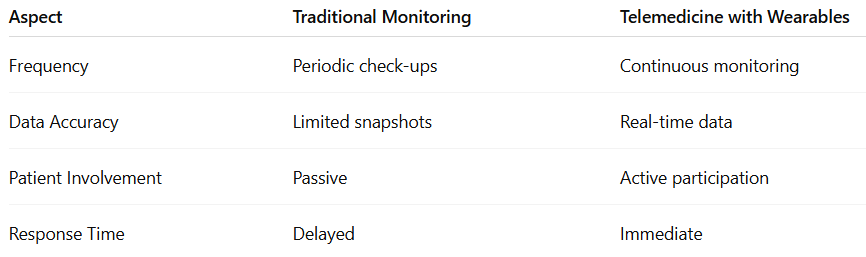
This shift from reactive to proactive care is one of the most exciting developments in modern healthcare. Instead of waiting for symptoms to worsen, doctors can intervene early based on real-time data.
Wearables also empower patients. When you can see your own health metrics, you become more aware of your habits and more motivated to make positive changes. It turns healthcare into a daily practice rather than an occasional event.
As technology continues to advance, the integration of wearables and telemedicine will only deepen, creating a more connected and responsive healthcare ecosystem.
Conclusion
Telemedicine has moved far beyond being a convenient alternative—it’s becoming a central pillar of modern healthcare. By combining accessibility, efficiency, and technological innovation, it reshapes how people experience medical care. From routine consultations to chronic disease management and mental health support, telemedicine opens doors that were once closed due to distance, cost, or time constraints.
What makes it truly powerful is its ability to adapt. Whether during a global crisis or in everyday life, telemedicine offers a flexible solution that meets patients where they are. At the same time, it continues to evolve through advancements in AI, wearable technology, and digital infrastructure.
Challenges still exist, from technical barriers to regulatory complexities, but they’re not roadblocks—they’re areas for improvement. As healthcare systems, governments, and technology providers continue to collaborate, these challenges will gradually be addressed.
Telemedicine isn’t replacing traditional healthcare; it’s enhancing it. It creates a hybrid model where digital and in-person care work together seamlessly. And as this integration deepens, one thing becomes clear: the future of healthcare is not just in hospitals and clinics—it’s also in our homes, our devices, and our daily lives.
FAQs
1. What is telemedicine in simple terms?
Telemedicine is the use of digital technology, like video calls and mobile apps, to provide healthcare services remotely without needing an in-person visit.
2. Is telemedicine as effective as in-person visits?
For many conditions, especially minor illnesses and follow-ups, telemedicine is just as effective. However, some cases still require physical examinations.
3. Is telemedicine safe and secure?
Yes, most telemedicine platforms use encryption and comply with strict privacy regulations to protect patient data.
4. What equipment do I need for telemedicine?
Typically, you only need a smartphone, tablet, or computer with an internet connection, camera, and microphone.
5. Can telemedicine be used for emergencies?
Telemedicine is not ideal for severe emergencies. In such cases, immediate in-person medical attention is necessary.
FAQs
https://www.americantelemed.org/
https://www.cdc.gov/mmwr/volumes/69/wr/mm6943a3.htm
https://www.healthaffairs.org/doi/10.1377/hlthaff.2015.1014
https://www.ncbi.nlm.nih.gov/pmc/articles/PMC7577680/
https://www.nimh.nih.gov/health/topics/technology-and-the-future-of-mental-health-treatment
https://www.hhs.gov/hipaa/index.html
https://www2.deloitte.com/us/en/insights/industry/health-care/future-of-virtual-health.html