When Startups Should Introduce Employee Benefits
So, you're building a startup. You've got the vision, the grind, and maybe even a small team helping you hustle toward product-market fit. But here's the kicker—when do you start offering benefits to your employees? It's a question every founder eventually faces, and honestly, there's no one-size-fits-all answer. But what’s clear is this: benefits can make or break your team’s morale, productivity, and loyalty.
In the early days, it's easy to push this down the to-do list. You're laser-focused on fundraising, building your MVP, and figuring out how to keep the lights on. Yet, as your startup evolves, employee benefits shift from “nice-to-have” to “need-to-have.” Not just to keep your people happy, but to compete with the big players for top-tier talent.
Let’s break it all down: what employee benefits are, why they matter, and most importantly—when is the right time to roll them out in your startup journey.
What Are Employee Benefits?
Employee benefits are more than just perks—they're the additional value your team gets on top of their salary. Think of them as the frosting on the cake. Sure, the cake (salary) is important, but the frosting (benefits) is what makes it irresistible.
These benefits come in many forms:
Health insurance
Paid time off (PTO)
Retirement plans (like 401(k)s)
Stock options
Wellness stipends
Parental leave
Remote work options
Learning & development budgets
Some of these are tangible benefits, like health insurance, which come with a clear cost and legal structure. Others are intangible, like flexible work hours, mental health support, or a strong company culture.
For startups, the trick is figuring out which ones matter most at which stage, and how to offer them without breaking the bank. You want to attract great talent, but you don’t want to run out of cash doing it.
Why Employee Benefits Matter for Startups
Startups are notorious for asking employees to wear multiple hats, work long hours, and navigate chaos. So, why would someone choose a startup over a comfy corporate job with a full benefits package? Easy—ownership, culture, and mission. But even that only goes so far if the benefits aren’t there to support their health, future, and sanity.
Here’s why benefits are critical:
Attracting Talent: You’re competing with tech giants and mid-sized firms offering full suites of benefits. A compelling benefits package can tip the scales in your favor.
Retention: Employee turnover is expensive—some say it costs up to 2x the salary of the departing employee. Good benefits keep people around.
Culture and Morale: Benefits signal that you care. A team that feels valued and supported will hustle harder and stay longer.
Employer Branding: A startup with a standout benefits package builds a strong reputation in the market. That’s a magnet for A-players.
Think of benefits as an investment, not an expense. The ROI shows up in performance, loyalty, and even the quality of applicants you attract.
The Startup Lifecycle and Benefits: Timing is Everything
Introducing benefits is all about timing. Start too early, and you risk overextending yourself. Wait too long, and you’ll lose great talent to companies that offer more.
Let’s break it down by startup stage:
Pre-Seed/Seed: Benefits are minimal. Maybe equity, maybe flexible hours.
Early-Stage (Post-Seed to Pre-Series A): You’re building a team. Simple, impactful benefits (like remote work or learning stipends) make sense here.
Series A/B: You're growing fast. Time to implement structured benefits like healthcare, PTO, and retirement plans.
Series C+ and Beyond: You’re no longer a scrappy team. Comprehensive, competitive benefits become the norm.
It’s not just about the funding round—it’s about the complexity of your org and your hiring needs. If you want senior engineers, they’ll expect a benefits package that respects their experience.
Pre-Seed and Seed Stage: Focus on Survival
At the pre-seed and seed stages, startups are often operating on pure adrenaline (and maybe some ramen noodles). The focus is crystal clear: build the product, validate the market, survive. Employee benefits? That’s usually a “we’ll cross that bridge later” conversation. And honestly, that’s okay—as long as you’re transparent with your team.
Here’s what the environment typically looks like:
Limited cash flow
Small founding team, often working for equity
No HR department
Lots of sweat, hustle, and uncertainty
At this stage, startups can get creative. Since you likely can’t afford full-blown health insurance or 401(k) plans yet, consider non-monetary or low-cost perks that still make a real impact:
Equity compensation – Offering ownership in the company can be a huge incentive, especially for early hires who believe in the mission.
Flexible hours – Let people work when they’re most productive. This is often more valuable than a small pay bump.
Remote work – Save money on office space while giving employees autonomy.
Unlimited vacation – It sounds lavish, but it's free to implement and helps build trust.
Founders should be honest: “We’re not at a place yet to offer full benefits, but we’re committed to growing with our team and rolling out benefits as soon as we can.” That kind of transparency builds loyalty and shows you’re thinking long-term.
Just don’t forget to plan ahead. Even in the early days, start doing your homework—explore basic healthcare options, research retirement plans, and ask employees what they’d value most when the time comes. It’ll save you from scrambling later.
Early-Stage Startups: Team Building Begins
You’ve raised your seed or maybe even pre-Series A funding, and now you’re bringing in your first set of full-time hires beyond the founding team. This is a critical stage—these hires will shape your product, culture, and future. And now, benefits start to matter a lot more.
Here’s why:
You're competing for talent in a brutal hiring market.
Senior hires often expect at least basic benefits.
A small, well-chosen benefits package can set the tone for your company culture.
This is where you introduce foundational benefits—just enough to show employees they’re valued without sinking your budget. Think of this as your "Minimum Viable Benefits Package" (MVB).
Some smart options at this stage:
Healthcare Stipends: If you can’t afford group insurance, offer a monthly stipend employees can use toward individual plans.
Basic PTO Policy: Even 10 days off plus sick days is better than nothing. Show your team you care about rest.
Learning & Development (L&D): A $500/year L&D stipend can go a long way in attracting self-driven employees.
Wellness Perks: A Calm subscription, gym stipend, or mental health sessions are low-cost but high-impact.
Remote Work & Coworking Stipends: Make remote life easier with a few hundred dollars a year for coworking spaces or home-office setups.
This stage is all about building trust and consistency. You don’t need to offer Google-level benefits, but you do need to be thoughtful and intentional. Document your policies, communicate them clearly, and stick to them.
Series A and Beyond: Scaling Culture with Benefits
Welcome to the big leagues. With Series A (and especially Series B), you're scaling—not just your product, but your team. You're hiring fast, bringing on middle management, and starting to formalize HR processes. That means it’s time to get serious about benefits.
By now, job candidates expect more than promises and pizza. They want structure. Stability. Security. And rightly so.
Here’s what usually enters the benefits chat at this point:
Full Health Insurance Plans: Medical, dental, and vision. Often 70-100% employer-paid for employees.
Retirement Plans (like 401(k)s): Even if you can’t match contributions yet, offering the plan shows maturity.
Parental Leave Policies: Maternity, paternity, and adoption leave should be clearly outlined.
Short-Term Disability Insurance: Often bundled with health plans, this is a smart addition as your workforce grows.
Life Insurance: Another easy add-on once you're working with benefits brokers.
This stage is also the perfect time to think about scalability and fairness. Benefits shouldn’t be handled ad hoc anymore. You need:
A clear employee handbook
A dedicated HR or People Ops person
Tools or platforms (like Gusto, Rippling, or Justworks) to manage everything
Scaling benefits is also about protecting your culture. As your team grows past 30, 50, or 100 people, the informal perks and founder one-on-ones no longer scale. Benefits become one of the key tools you use to show employees: we still care about you.
Essential Employee Benefits for Startups
Let’s talk about the core benefits that most startups should consider as they grow. These aren’t flashy perks—they’re the backbone of a solid offering. If you're looking to create a competitive package that shows you value your team, start here:
1. Health Insurance
This is usually the first “real” benefit companies introduce. Even if you can’t afford to cover everything, contributing 70–80% of the premium is standard. Employees will appreciate just having a plan they can rely on.
2. Paid Time Off (PTO)
You need a formal PTO policy, even if it's just 15–20 days plus holidays. Unlimited PTO might sound cool, but it only works in cultures where time off is actually encouraged.
3. Retirement Plans
Offering a 401(k) plan—even without matching contributions—adds legitimacy to your business. Start with a low-fee provider like Guideline or Human Interest.
4. Equity Compensation
Stock options or RSUs are still king in startup land. Make sure your equity offer is clear, fair, and comes with education around what it actually means.
These foundational benefits send a message: We’re not just a scrappy startup—we’re building a company where people can build their careers.
Low-Cost, High-Value Benefits for Bootstrapped Startups
Let’s face it: not every startup has the luxury of venture backing. If you’re bootstrapping or operating on a tight budget, that doesn’t mean you can’t offer meaningful perks. In fact, some of the most beloved benefits cost little to nothing but go a long way in building a loyal team.
1. Flexible Work Hours
This one tops the list. Allowing your team to choose when they work (as long as they're delivering) is a benefit many larger companies still struggle to offer. It shows trust and supports work-life balance.
2. Remote Work
Whether you go fully remote or offer a hybrid model, remote work is more than just a trend—it’s expected. It also saves money on office space, utilities, and commuting expenses. Win-win.
3. Mental Health Days
This is simple: offer a few additional days off throughout the year specifically for mental health. No questions asked. It’s a powerful way to show empathy and normalize self-care.
4. Learning and Development Budgets
Even $200–$500 per year per employee can open doors to online courses, books, conferences, and workshops. Personal growth = professional growth.
5. Coworking or Home Office Stipends
Working from the kitchen table isn’t ideal forever. Offer a small stipend to cover coworking memberships or home office setups—chairs, desks, webcams, etc.
6. Recognition Programs
A simple monthly shout-out, a small bonus, or even a Slack emoji celebration for a job well done can significantly boost morale.
7. Clear Career Pathing
Map out a growth plan for each role, even if it's informal. Employees are more likely to stay when they see a future with your company.
None of these benefits will break the bank, but together they send a strong message: We care about you, and we’re thinking beyond the paycheck.
How to Prioritize Which Benefits to Offer
Every startup is different. What works for a SaaS company of 12 may not make sense for a hardware startup of 50. So how do you choose the right benefits?
Step 1: Ask Your Employees
This might sound obvious, but most startups skip it. Run a simple survey:
What benefits would you value most?
Which current perks do you use?
Are there any gaps in what we offer?
Your team will tell you exactly what matters to them.
Step 2: Consider Your Hiring Goals
Are you trying to attract senior engineers? Parents re-entering the workforce? Remote international talent? Tailor your benefits to appeal to the type of talent you're targeting.
Step 3: Look at Your Industry Peers
You don’t need to copy competitors, but you should be in the same ballpark. If everyone in your space is offering healthcare and equity, and you’re not—that’s a red flag for candidates.
Step 4: Focus on Scalability
Choose benefits that can grow with you. It’s better to roll out a basic health plan now and upgrade it later than to offer an expensive perk you can’t sustain.
Step 5: Prioritize Compliance
Some benefits are legally required depending on your size and location (more on this soon). Don’t skip these—they can come back to bite you.
Remember: it's better to do a few things well than spread yourself thin trying to offer everything. Prioritize what your team will truly value.
Building a Competitive Advantage Through Benefits
Benefits aren’t just about keeping your employees happy. They’re also a strategic differentiator. In a world where job listings start to look the same—"fast-paced, innovative, growth-minded"—your benefits package can set you apart.
1. Attracting Top Talent
When candidates are comparing multiple offers, benefits often become the deciding factor. Offer something unique and thoughtful, and you’ll win people over—even if your base salary isn’t the highest.
2. Creating Brand Ambassadors
Employees who feel valued will talk about it. They’ll leave positive Glassdoor reviews, share your job postings, and refer their talented friends. That’s free marketing for your hiring pipeline.
3. Boosting Retention
It costs a lot to replace an employee. Strong benefits build loyalty and reduce churn—saving you time and money.
4. Reinforcing Company Values
Benefits should align with your mission. Are you a wellness company? Offer gym reimbursements. Focused on education? Offer tuition support. Make benefits a reflection of what you stand for.
Your startup can’t outpay Google. But you can out-care them. That’s your edge.
Legal Requirements vs. Voluntary Benefits
Before you get too creative with perks and benefits, you need to understand what’s legally required and what’s voluntary. While some benefits are optional, others are mandated by federal or state law, especially as your startup grows.
Mandatory (Legal) Benefits
These vary by location and company size, but here are the basics in the U.S.:
Social Security and Medicare Contributions: These are payroll taxes you must pay as an employer.
Unemployment Insurance: Required by law in every state, often handled through your payroll provider.
Workers’ Compensation Insurance: Mandatory if you have employees. It covers injuries on the job.
Disability Insurance: Required in states like California, New Jersey, and New York.
Family and Medical Leave: Under the Family and Medical Leave Act (FMLA), companies with 50+ employees must provide unpaid, job-protected leave.
COBRA Compliance: If you offer health insurance and have 20+ employees, you must allow departing employees to continue coverage at their own expense.
Voluntary (Discretionary) Benefits
These are what really shape your company culture and appeal:
Health, dental, vision insurance
PTO and vacation days
Retirement savings plans
Wellness programs
Learning & development budgets
Equity and bonus programs
Remote work flexibility
Understanding the difference helps you stay compliant and intentional. You don’t want to skip something required by law—or promise something you legally can’t follow through on.
It’s smart to consult a benefits broker or employment attorney once you hit 10–15 employees. That’s the point where compliance starts to get trickier, and mistakes can become costly.
Measuring ROI on Employee Benefits
It’s easy to think of benefits as just another expense. But done right, they provide real return on investment. The challenge? Measuring that ROI in a way that makes sense for startups.
Here’s how to approach it:
1. Retention Metrics
If your turnover rate drops after introducing better benefits, that’s a sign they’re working. Retaining one good employee for a year often offsets the full cost of their benefits.
2. Engagement Scores
Use employee engagement surveys (quarterly or biannually) to measure satisfaction. Benefits are often directly tied to how valued people feel.
3. Productivity and Output
When employees are healthier, less stressed, and more supported, they perform better. Track team performance over time to spot any correlation with benefits improvements.
4. Hiring Efficiency
If your time-to-hire is shrinking and you're getting better candidates, your benefits might be helping your brand stand out.
5. Usage Rates
Low uptake on a benefit might mean employees don’t understand it or don’t value it. High usage = high impact.
Keep in mind: the true ROI of benefits isn’t always immediate. It builds over time, as your reputation, team cohesion, and culture strengthen.
Pro tip: Create a simple benefits dashboard. Track what's offered, what’s used, what it costs, and what results you're seeing. It doesn’t have to be fancy—just actionable.
Tech Tools and Platforms to Manage Benefits
Managing benefits manually gets messy fast. Thankfully, there are amazing tools built specifically for startups to streamline everything—from onboarding to compliance to payroll deductions.
Here are some of the top options:
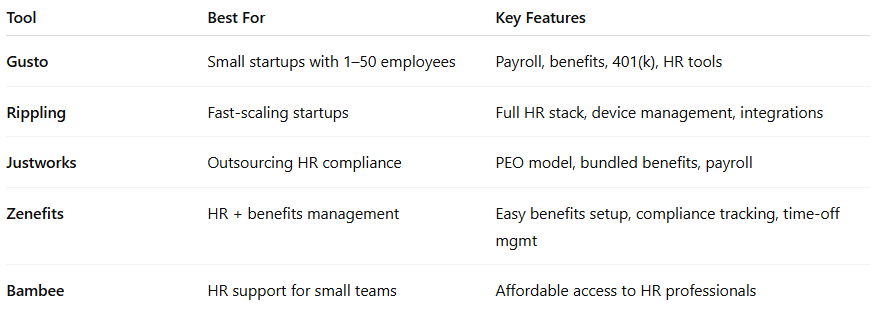
Most of these platforms offer tiered pricing, so you can start small and scale up.
Using the right tech makes life easier for founders, employees, and HR teams—and helps you avoid costly compliance mistakes.
Mistakes to Avoid When Offering Benefits
Even with the best intentions, startups can fumble their benefits game. Here are some common pitfalls—and how to dodge them:
1. Overpromising Early
Don’t promise “top-tier benefits soon” if you don’t have a clear timeline or budget. Employees remember broken promises.
2. Being Vague or Inconsistent
Your PTO policy, healthcare coverage, and equity details should be written down, shared, and consistent across the team. Avoid gray areas.
3. Ignoring Compliance
Failing to offer required benefits (like workers’ comp) or misclassifying employees as contractors can lead to legal trouble. Stay on top of local laws.
4. One-Size-Fits-All Thinking
Your 25-year-old engineer and your 40-year-old operations lead might value very different benefits. Offer flexibility and options where you can.
5. Waiting Too Long
Many startups delay offering benefits until it’s too late—after they’ve lost great talent. Start small, but start early.
Benefits aren’t just about checking boxes. They’re about building trust, showing appreciation, and laying the foundation for a strong, scalable culture.
Case Studies: Startups That Did It Right
Let’s look at a few real-world examples of startups that got creative—and strategic—with their benefits.
1. Buffer
Fully remote since day one, Buffer offers:
Transparent salaries
Generous PTO and sabbaticals
Health and wellness stipends
Learning budgets
Their benefits are deeply aligned with their values of transparency and balance. The result? High retention and a globally distributed team that loves working there.
2. Basecamp
This productivity software company offers:
A 4-day workweek (in the summer)
Full health benefits
Paid vacations, even for contractors
Profit sharing
They’ve used benefits not just to retain talent, but to communicate a very specific cultural message: We value your time and sanity.
3. Notion
As they scaled from a small team to a unicorn startup, Notion expanded their benefits package significantly. They started with just healthcare and equity but eventually added:
Generous parental leave
Home office stipends
Flexible work arrangements
By scaling thoughtfully, they retained top talent through rapid growth.
Conclusion
When it comes to introducing employee benefits in a startup, timing, strategy, and authenticity are everything. You don’t need to offer everything from day one—but you do need to start thinking about it early. Why? Because benefits are more than just perks; they’re a signal of how much you value your team and how seriously you’re building your company.
Startups move fast. Teams grow, funding rounds close, and priorities shift. But one constant remains: your people. The right benefits—introduced at the right time—can make all the difference in attracting top-tier talent, retaining your rockstars, and building a company culture that scales with you.
Here’s a quick recap to keep in your back pocket:
Start small with flexible, low-cost benefits at the seed stage.
Introduce foundational perks like healthcare and PTO during early growth.
Get competitive with full benefits packages as you scale post-Series A.
Listen to your team—they’ll tell you what matters most.
Use tools and platforms to stay compliant and organized.
Don’t overpromise or delay—transparency builds trust.
If you build your benefits strategy with the same care you give your product, your startup won’t just grow—it’ll thrive.
FAQs
1. When should a startup offer health insurance?
Most startups begin offering health insurance around the Series A stage when they have more funding and a growing team. However, earlier-stage companies can offer stipends or explore affordable group plans through HR platforms.
2. Can early-stage startups offer employee benefits without VC funding?
Absolutely. Many bootstrapped startups offer low-cost, high-impact benefits like remote work, flexible hours, learning budgets, and equity—all without major financial commitments.
3. What are the most important benefits for attracting talent?
Health insurance, paid time off, flexible work arrangements, and equity compensation are usually the top priorities for candidates evaluating startup roles.
4. How can startups compete with big companies on benefits?
Startups can’t always match salaries or premium packages, but they can offer autonomy, equity, purpose-driven work, and flexible cultures—huge value-adds for many candidates.
5. Is offering equity enough in the early days?
Equity is a strong incentive, but it’s not enough alone. Combine it with transparent communication, flexibility, and some form of support (mental health, professional growth) to show you're serious about team wellbeing.
SOURCEs
https://www.dol.gov/agencies/ebsa
https://www.healthcare.gov/small-businesses/
https://www.justworks.com/resources
https://www.shrm.org/resourcesandtools/hr-topics/benefits/pages/default.aspx