Workers Compensation Pharmacy Benefits: A Complete Guide for Employers and Employees

Understanding Workers Compensation Pharmacy Benefits
What Are Pharmacy Benefits in Workers Compensation?
Workers compensation pharmacy benefits might sound like a technical, back-office function, but in reality, they sit right at the heart of employee recovery. Imagine you’ve just suffered a workplace injury—maybe a back strain from lifting or a repetitive stress injury from typing all day. The first thing your doctor does, after diagnosis, is prescribe medication. That’s where pharmacy benefits come in, quietly ensuring you get the medication you need without the added stress of figuring out how to pay for it.
At its core, workers compensation pharmacy benefits refer to prescription drug coverage provided under a workers compensation insurance policy. These benefits are specifically designed to cover medications related to workplace injuries or occupational illnesses. Unlike traditional health insurance, these prescriptions are typically paid directly by the insurer, meaning the injured worker often doesn’t have to pay out of pocket at the pharmacy counter.
This system is usually facilitated through networks of pharmacies and managed by specialized entities called Pharmacy Benefit Managers (PBMs). These organizations act as the middlemen between insurers, pharmacies, and healthcare providers. They ensure prescriptions are appropriate, cost-effective, and compliant with treatment guidelines. It’s a bit like having a traffic controller ensuring everything flows smoothly—no unnecessary delays, no inflated costs, and no inappropriate prescriptions slipping through.
What makes this system unique is its focus on workplace-related injuries. Not every medication qualifies—only those directly tied to the injury are covered. This distinction keeps the system efficient but also introduces complexity. Determining whether a medication is “related” often requires careful documentation and sometimes even legal interpretation.
Understanding this foundation helps both employers and employees navigate the system more confidently. It’s not just about medication—it’s about recovery, compliance, and controlling costs in a structured, legally guided environment.
Why These Benefits Matter in Workplace Injury Cases
When someone gets injured on the job, time suddenly becomes incredibly valuable. Every day an employee remains off work not only impacts their personal life but also creates ripple effects for the employer—lost productivity, increased insurance costs, and operational disruptions. This is exactly where workers compensation pharmacy benefits play a critical role, often more than people initially realize.
Access to timely and appropriate medication can dramatically influence recovery outcomes. Think about it: if pain is managed effectively and inflammation is controlled early, an injured worker is far more likely to regain function quickly. On the flip side, delays in medication approval or access can prolong recovery, sometimes turning what should have been a short-term issue into a chronic condition.
There’s also a financial dimension that cannot be ignored. According to industry estimates, prescription drugs account for up to 15–20% of total workers compensation medical costs in some jurisdictions. That’s a significant portion, especially when you consider the rising prices of medications. Without proper management, these costs can spiral quickly, putting pressure on employers and insurers alike.
But it’s not just about money—it’s also about safety and responsibility. Certain medications, particularly opioids, carry a high risk of dependency. A well-structured pharmacy benefit program includes safeguards such as drug utilization reviews and monitoring systems. These tools help ensure that injured workers receive medications that are not only effective but also safe.
From the employee’s perspective, these benefits provide peace of mind. Knowing that necessary medications will be covered removes a major source of stress during an already difficult time. From the employer’s side, it ensures compliance with legal obligations while promoting faster return-to-work outcomes.
In many ways, pharmacy benefits act as the bridge between medical treatment and operational efficiency. They ensure that recovery is not delayed by administrative hurdles, and they help maintain a balance between care quality and cost control. That balance is what makes them indispensable in any workers compensation system.
How Workers Compensation Pharmacy Benefits Work
The Role of Pharmacy Benefit Managers (PBMs)
If workers compensation pharmacy benefits were a movie, Pharmacy Benefit Managers (PBMs) would be the behind-the-scenes directors making sure every scene runs smoothly. You don’t always see them, but their influence is everywhere—from the medications prescribed to the amount paid at the pharmacy counter.
PBMs are third-party administrators that manage prescription drug programs on behalf of insurers and employers. Their primary goal is to ensure that injured workers receive the right medications at the right price while minimizing unnecessary or potentially harmful prescriptions. Sounds simple, right? In reality, it’s a complex balancing act involving data analysis, clinical oversight, and cost management strategies.
One of the key tools PBMs use is a formulary, which is essentially a curated list of approved medications. These lists are developed based on clinical evidence, cost-effectiveness, and regulatory guidelines. By guiding physicians toward preferred medications, PBMs help control costs without compromising treatment quality. It’s like having a recommended menu at a restaurant—you can order anything, but some options are clearly better choices.
PBMs also negotiate prices with drug manufacturers and pharmacies. Because they operate at scale, they can secure discounts that individual employers or insurers wouldn’t be able to obtain on their own. This collective bargaining power is a major reason why PBMs are such a critical component of the system.
Another important function is clinical oversight. PBMs employ pharmacists and medical professionals who review prescriptions to ensure they align with treatment guidelines. For example, if a doctor prescribes a high-risk medication, the PBM may flag it for review or suggest safer alternatives. This not only protects the patient but also reduces liability for employers and insurers.
In essence, PBMs serve as the engine that drives efficiency in workers compensation pharmacy benefits. Without them, the system would likely become fragmented, more expensive, and far less effective at ensuring safe and appropriate care.
How Claims Are Processed Through PBMs
Understanding how a prescription moves from a doctor’s pen to a patient’s hands reveals just how intricate the workers compensation pharmacy system really is. It’s not as simple as writing a prescription and picking it up—there’s an entire workflow happening behind the scenes, orchestrated largely by PBMs.
It usually begins with the injured worker visiting a healthcare provider. Once the provider determines that medication is necessary, they write a prescription linked specifically to the workplace injury claim. This linkage is crucial because it ensures the medication qualifies under workers compensation coverage rather than being billed through personal health insurance.
When the worker takes the prescription to a pharmacy within the PBM network, the pharmacist enters the claim into the system. Almost instantly, the PBM evaluates several factors: Is the medication related to the injury? Is it on the approved formulary? Are there any safety concerns or potential drug interactions? This process, known as real-time adjudication, happens in seconds but involves sophisticated algorithms and clinical rules.
If everything checks out, the claim is approved, and the worker receives the medication with little to no out-of-pocket cost. If there’s an issue—say the drug isn’t on the formulary or exceeds recommended dosage limits—the system may flag it for review. In some cases, the PBM may contact the prescribing physician to recommend an alternative.
Another layer of oversight comes through retrospective reviews, where claims are analyzed after the fact to identify patterns of overuse, misuse, or fraud. This continuous monitoring helps maintain the integrity of the system and ensures long-term sustainability.
What’s fascinating is how seamless this process feels to the end user. From the worker’s perspective, it often looks like a standard pharmacy visit. But behind that simplicity is a highly coordinated system designed to balance speed, safety, and cost efficiency.
This streamlined approach is what allows workers compensation pharmacy benefits to function effectively at scale, ensuring that thousands of injured workers receive timely access to medications without unnecessary administrative friction.
Types of Medications Covered
Acute vs. Chronic Medications
When you think about medications in a workers compensation case, it’s tempting to assume they’re all short-term—something to ease pain for a few days and then move on. But reality paints a more layered picture. Workers compensation pharmacy benefits must account for both acute and chronic medications, each playing a very different role in the recovery journey.
Acute medications are typically prescribed immediately after an injury. These are your fast-acting solutions—pain relievers, anti-inflammatory drugs, muscle relaxants—designed to stabilize the situation and provide quick relief. Picture someone who’s just strained their back lifting heavy equipment. The goal here is to reduce pain and inflammation quickly so the body can begin healing. These medications are usually short-term, often lasting a few days to a couple of weeks, and they’re relatively straightforward to manage.
Chronic medications, on the other hand, enter the picture when recovery isn’t so simple. Some injuries evolve into long-term conditions, such as nerve damage or chronic pain syndromes. In these cases, medications may be required for months or even years. This is where things get complicated. Long-term use increases the risk of side effects, dependency, and escalating costs. It also requires continuous monitoring to ensure the treatment remains effective and appropriate.
From a management perspective, PBMs and insurers pay close attention to chronic prescriptions. They often implement stricter controls, such as prior authorization and ongoing reviews, to ensure that these medications are truly necessary. It’s a bit like maintaining a car—short trips are easy to manage, but long-term use requires regular check-ups and adjustments.
For injured workers, understanding this distinction is crucial. Acute medications are about immediate relief, while chronic medications are about long-term management. Both are essential, but they come with different levels of oversight and responsibility.
Common Drug Categories in Workers Compensation
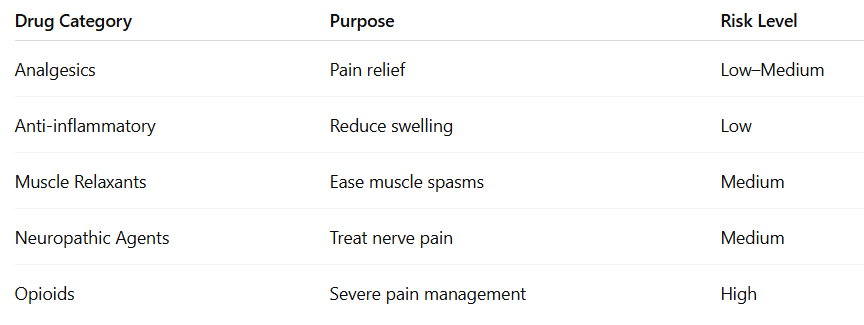
If you peek inside the typical list of medications covered under workers compensation, you’ll notice a pattern. Certain drug categories show up again and again, reflecting the most common types of workplace injuries. These categories aren’t random—they’re closely tied to how the human body responds to physical stress and trauma.
One of the most prevalent categories is analgesics, or pain relievers. This includes everything from over-the-counter options like ibuprofen to stronger prescription medications. Pain is often the first and most immediate symptom of an injury, so it makes sense that managing it is a top priority. However, not all pain relievers are treated equally. Non-opioid options are typically preferred due to their lower risk profile.
Next, you have anti-inflammatory drugs, which help reduce swelling and promote healing. These are especially common in musculoskeletal injuries—think sprains, strains, and joint issues. By controlling inflammation, these medications help restore mobility and function more quickly.
Muscle relaxants are another frequent player, particularly in cases involving back or neck injuries. They help alleviate muscle spasms, which can be both painful and limiting. Then there are neuropathic agents, used for nerve-related pain. These medications target the nervous system rather than the site of injury, offering relief when traditional painkillers fall short.
Of course, it’s impossible to talk about workers compensation pharmacy benefits without mentioning opioids. While effective for severe pain, they come with significant risks, including dependency and overdose. Because of this, their use is heavily monitored and often restricted.
Here’s a quick snapshot of common categories:
Understanding these categories helps both employers and employees make sense of treatment plans. It’s not just about what’s prescribed—it’s about why it’s prescribed and how it fits into the broader recovery strategy.
Cost Control Strategies in Workers Compensation Pharmacy Benefits
Formularies and Drug Utilization Review
Cost control in workers compensation pharmacy benefits isn’t about cutting corners—it’s about making smarter decisions. One of the most effective tools in this space is the formulary, which acts like a curated guide for prescribing medications. Instead of leaving every decision wide open, formularies provide a structured list of preferred drugs based on clinical effectiveness and cost efficiency.
Think of a formulary as a well-organized playlist. Sure, you can add any song you want, but the playlist highlights the best options for the mood you’re trying to create. In the same way, formularies guide physicians toward medications that are proven to work while avoiding unnecessary or overly expensive alternatives.
But formularies alone aren’t enough. That’s where Drug Utilization Review (DUR) comes into play. DUR is a systematic process that evaluates prescriptions before, during, and after they’re dispensed. It checks for issues like duplicate therapies, incorrect dosages, and potential drug interactions. This isn’t just about saving money—it’s about protecting patient safety.
There are typically three types of DUR:
-
Prospective DUR: Conducted before the medication is dispensed
-
Concurrent DUR: Happens during the course of treatment
-
Retrospective DUR: Reviews past prescriptions for patterns or issues
By combining formularies with DUR, PBMs create a layered defense system. It’s like having both a map and a GPS—you know where you’re going, and you’re constantly being guided along the safest, most efficient route.
The impact of these strategies is significant. Studies have shown that effective formulary management can reduce pharmacy costs by 10–20% while maintaining or even improving patient outcomes. That’s a rare win-win in healthcare.
Generic Substitution and Cost Savings
If there’s one strategy that consistently delivers results in workers compensation pharmacy benefits, it’s generic substitution. At first glance, it might seem like a simple switch—brand-name drugs replaced with their generic equivalents. But the impact of this shift is anything but small.
Generic drugs contain the same active ingredients as their brand-name counterparts and are required to meet the same standards for safety, quality, and effectiveness. The key difference? Price. Generics can cost 30% to 80% less, making them a powerful tool for controlling expenses without compromising care.
Why such a big price gap? It largely comes down to development costs. Brand-name drugs often carry the financial burden of research, development, and marketing. Once their patents expire, generic manufacturers can produce the same medication at a fraction of the cost.
In the context of workers compensation, where prescription costs can add up quickly, this difference is crucial. PBMs actively promote generic substitution through formularies and pharmacy networks. In many cases, pharmacists are encouraged—or even required—to dispense generics unless the prescribing physician specifies otherwise.
But cost savings isn’t the only benefit. Generics also contribute to consistency in treatment. Because they’re widely available, there’s less risk of supply disruptions. This ensures that injured workers can continue their medication regimen without interruption.
There’s sometimes a perception that generics are somehow “less effective,” but this is largely a myth. Regulatory agencies require rigorous testing to ensure equivalence. In practice, most patients experience the same outcomes with generics as they do with brand-name drugs.
For employers and insurers, the math is straightforward: lower costs, same results. For employees, it means continued access to necessary medications without added financial stress. It’s one of those rare areas in healthcare where everyone benefits.
Challenges in Workers Compensation Pharmacy Management
Opioid Misuse and Risk Management
Few topics in workers compensation pharmacy benefits carry as much weight—or concern—as opioid use. These medications are undeniably effective for managing severe pain, especially in the immediate aftermath of an injury. But they also come with a shadow: the risk of dependency, misuse, and long-term harm.
Over the past decade, the opioid crisis has forced the entire healthcare system to rethink how these drugs are prescribed and monitored. Workers compensation programs have been no exception. In fact, they’ve often been at the center of the conversation due to the nature of workplace injuries, which frequently involve pain management.
The challenge lies in finding balance. On one hand, injured workers need relief to function and recover. On the other hand, prolonged opioid use can lead to dependency, delayed recovery, and even permanent disability. It’s a delicate line to walk.
PBMs and insurers address this issue through a combination of strategies. These include prescription limits, prior authorization requirements, and ongoing monitoring. Some programs also incorporate alternative treatments, such as physical therapy or non-opioid medications, to reduce reliance on opioids.
Data plays a crucial role here. Advanced analytics can identify patterns that suggest misuse, such as multiple prescriptions from different providers or unusually high dosages. When these red flags appear, interventions can be implemented quickly.
The human side of this issue is just as important. Education for both physicians and patients helps set realistic expectations about pain management. Not every injury requires strong opioids, and understanding that can make a significant difference in outcomes.
Managing opioid use isn’t about restriction—it’s about responsibility. Done right, it protects both the injured worker and the integrity of the workers compensation system as a whole.
Fraud, Waste, and Abuse in Pharmacy Claims
Not every challenge in workers compensation pharmacy benefits comes from medical complexity—some stem from human behavior. Fraud, waste, and abuse (FWA) represent a persistent issue that can quietly drain resources and undermine the system’s effectiveness.
Fraud is the most obvious of the three. This might involve billing for medications that were never dispensed or prescribing drugs that aren’t medically necessary. While less common than other issues, fraud can be costly and difficult to detect without robust monitoring systems.
Waste, on the other hand, is often unintentional. It includes things like overprescribing, duplicate therapies, or medications that go unused. Imagine a patient receiving multiple prescriptions for similar drugs simply because different providers weren’t communicating effectively. The result? Higher costs with no added benefit.
Abuse falls somewhere in between. This could involve patients seeking unnecessary medications or providers prescribing more than needed. It’s not always malicious, but it still impacts the system.
PBMs combat FWA through a mix of technology and oversight. Data analytics, audit programs, and real-time alerts help identify suspicious patterns. For example, if a single provider consistently prescribes high-cost medications outside of guidelines, that pattern can be flagged for review.
The financial impact is significant. Industry estimates suggest that FWA can account for 3–10% of total healthcare spending, and workers compensation is not immune. Addressing these issues isn’t just about saving money—it’s about ensuring that resources are used where they’re truly needed.
By tightening controls and improving transparency, stakeholders can reduce FWA while maintaining high-quality care. It’s a continuous effort, but one that pays off in both financial and clinical outcomes.
Legal and Regulatory Considerations
State-Specific Workers Compensation Laws
If there’s one thing that makes workers compensation pharmacy benefits particularly complex, it’s the fact that no two states handle them exactly the same way. Unlike some federal programs that operate under a unified set of rules, workers compensation is largely governed at the state level. That means the regulations surrounding pharmacy benefits can vary significantly depending on where the injury occurs.
For example, some states have adopted closed formularies, which strictly limit the medications that can be prescribed without prior approval. Texas and California are often cited as leaders in this approach, using evidence-based guidelines to reduce unnecessary prescriptions—especially opioids. Other states operate with more flexible systems, allowing physicians greater discretion but relying heavily on retrospective reviews to catch issues.
This patchwork of regulations can be challenging for multi-state employers. Imagine managing claims across five or ten different states, each with its own rules about drug approvals, reimbursement rates, and documentation requirements. It’s not just a compliance issue—it’s an operational puzzle that requires careful coordination.
Another layer of complexity comes from fee schedules, which dictate how much pharmacies and providers are reimbursed for medications. These schedules can influence everything from which drugs are prescribed to how quickly claims are processed. In some states, fee schedules are tightly controlled, while in others, there’s more room for negotiation.
From an injured worker’s perspective, these differences can directly impact access to care. A medication that’s easily approved in one state might require additional authorization in another, potentially causing delays. That’s why understanding local regulations isn’t just a legal necessity—it’s a practical one.
Employers and insurers often rely on PBMs to navigate this landscape. With their expertise and technology, PBMs can adapt programs to meet state-specific requirements while maintaining consistency in care. It’s a bit like having a GPS that automatically adjusts your route based on local traffic laws—without it, you’d be constantly second-guessing your next move.
Compliance Requirements for Employers and Insurers
Compliance in workers compensation pharmacy benefits isn’t optional—it’s the backbone of the entire system. Employers and insurers are legally obligated to provide appropriate medical care, including prescription medications, for work-related injuries. Failing to meet these obligations can lead to penalties, lawsuits, and reputational damage.
One of the key compliance areas involves timely access to medication. Regulations often require that injured workers receive necessary prescriptions without undue delay. This means employers and insurers must have systems in place to approve and process claims بسرعة and efficiently. Delays can not only worsen medical outcomes but also increase the likelihood of disputes.
Another critical aspect is documentation. Every prescription must be clearly linked to the workplace injury and supported by medical evidence. This ensures that only relevant treatments are covered and helps prevent misuse of the system. In many cases, detailed records are also required for audits and regulatory reviews.
There’s also a growing emphasis on clinical guidelines. Many states now require adherence to evidence-based treatment protocols, particularly for high-risk medications like opioids. These guidelines help standardize care and reduce variability, but they also add another layer of responsibility for employers and insurers.
Data privacy and security cannot be overlooked either. Handling pharmacy claims involves sensitive medical information, which must be protected under laws such as HIPAA. This means implementing robust cybersecurity measures and ensuring that all stakeholders—from PBMs to pharmacies—follow strict data protection practices.
In practice, compliance is a team effort. Employers, insurers, PBMs, and healthcare providers all play a role in ensuring that pharmacy benefits are delivered responsibly. When everyone is aligned, the system runs smoothly. When they’re not, even small gaps can lead to significant problems.
Benefits for Employers and Injured Workers
Faster Recovery and Return-to-Work Outcomes
At the heart of every workers compensation case is a simple goal: helping the injured employee recover and return to work as quickly and safely as possible. Pharmacy benefits play a surprisingly powerful role in achieving this goal, often acting as the catalyst that keeps recovery on track.
Think about recovery like a chain reaction. The right medication reduces pain, which allows for better participation in physical therapy. Improved mobility leads to faster healing, which ultimately shortens the time away from work. Remove or delay any one of these elements, and the entire process slows down.
Timely access to medication is especially critical in the early stages of an injury. Studies have shown that delays in treatment can increase the likelihood of a case becoming chronic. Once that happens, recovery becomes more complicated, more expensive, and far less predictable.
There’s also a psychological component to consider. Pain and discomfort can take a toll on mental health, leading to frustration, anxiety, or even depression. Effective medication management helps alleviate these issues, creating a more positive recovery experience.
From an employer’s perspective, faster recovery translates directly into reduced costs. Fewer lost workdays, lower disability payments, and decreased administrative burden all contribute to a healthier bottom line. But beyond the numbers, there’s also a cultural impact. Supporting employees during their recovery builds trust and reinforces a positive workplace environment.
For employees, the benefits are even more personal. Returning to work isn’t just about income—it’s about regaining a sense of normalcy and purpose. Pharmacy benefits, when managed effectively, help make that transition smoother and more achievable.
Financial and Administrative Advantages
While clinical outcomes often take center stage, the financial and administrative benefits of workers compensation pharmacy programs are just as significant. In many ways, these programs act as a stabilizing force, helping organizations manage both predictable and unexpected costs.
One of the most obvious advantages is cost containment. With tools like formularies, generic substitution, and negotiated pricing, pharmacy benefit programs can significantly reduce prescription expenses. Considering that medications can account for a sizable portion of total claim costs, even small efficiencies can add up quickly.
Administrative efficiency is another major win. Without a structured pharmacy benefit system, managing prescriptions would be a logistical nightmare. Employers would need to handle reimbursements, verify claims, and monitor usage manually. PBMs streamline these processes, automating much of the workload and reducing the risk of errors.
There’s also the benefit of data visibility. Modern pharmacy benefit programs provide detailed analytics, allowing employers and insurers to track trends, identify risks, and make informed decisions. For example, if data shows a spike in opioid prescriptions, proactive measures can be taken before it becomes a larger issue.
Risk management is closely tied to these insights. By identifying potential problems early—whether it’s overprescribing, fraud, or non-compliance—organizations can take corrective action quickly. This not only saves money but also protects against legal and regulatory risks.
In a broader sense, these advantages create a more predictable and manageable system. Instead of reacting to problems as they arise, employers and insurers can take a proactive approach, guiding outcomes rather than simply responding to them.
Technology and Innovation in Pharmacy Benefits
Predictive Analytics and Data-Driven Decisions
The evolution of workers compensation pharmacy benefits has been heavily influenced by technology, and nowhere is that more evident than in the rise of predictive analytics. What used to be a reactive system—addressing issues after they occurred—has transformed into a proactive one that anticipates problems before they escalate.
Predictive analytics uses historical data, algorithms, and machine learning to identify patterns and forecast outcomes. For example, by analyzing past claims, the system can predict which cases are at risk of becoming long-term or which patients might require more intensive intervention. It’s like having a weather forecast for healthcare—giving you time to prepare before the storm hits.
One of the most impactful applications is in opioid risk management. By identifying early warning signs—such as increasing dosages or multiple prescriptions—stakeholders can intervene before dependency develops. This not only improves patient safety but also reduces long-term costs.
Data-driven decision-making also enhances formulary management. Instead of relying solely on static guidelines, PBMs can continuously update their recommendations based on real-world outcomes. This creates a dynamic system that evolves alongside medical advancements and changing trends.
For employers and insurers, the value lies in clarity. Instead of navigating the system blindly, they have access to actionable insights that inform strategy and policy. It’s the difference between guessing and knowing.
Telepharmacy and Digital Health Integration
Technology isn’t just improving decision-making—it’s also transforming how care is delivered. Telepharmacy and digital health tools are reshaping the way injured workers access medications and support services, making the entire process more convenient and efficient.
Telepharmacy allows patients to consult with pharmacists remotely, often through video calls or secure messaging platforms. This is particularly valuable for workers in remote areas or those with mobility limitations. Instead of traveling to a pharmacy, they can receive guidance from the comfort of their home.
Digital health integration goes a step further by connecting various components of the healthcare system. Electronic prescriptions, real-time claim processing, and mobile health apps all work together to create a seamless experience. Imagine receiving a prescription digitally, having it automatically approved, and picking it up—or even having it delivered—without any paperwork. That’s the direction the industry is heading.
These innovations also improve adherence to treatment plans. Reminders, digital tracking, and easy access to support make it more likely that patients will follow their prescribed regimen. And as any healthcare professional will tell you, adherence is a major factor in successful outcomes.
From a broader perspective, these technologies are breaking down barriers. They make pharmacy benefits more accessible, more efficient, and more aligned with the needs of modern workers. It’s not just about convenience—it’s about creating a system that works better for everyone involved.
Choosing the Right Pharmacy Benefit Partner
Key Features to Look for in a PBM
Choosing a Pharmacy Benefit Manager (PBM) for workers compensation isn’t just a vendor decision—it’s a strategic move that can shape medical outcomes, cost control, and even employee satisfaction. Not all PBMs operate the same way, and picking the wrong one can quietly inflate costs or create friction in the recovery process. So what actually separates a strong PBM from an average one?
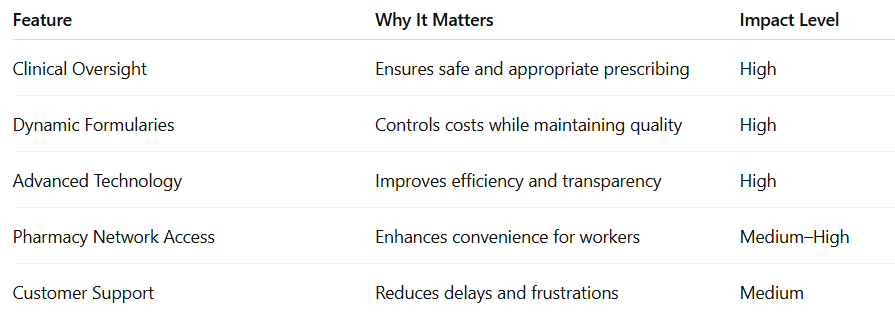
First, clinical expertise should be at the top of the list. A reliable PBM isn’t just processing claims; it’s actively guiding treatment decisions. This means having licensed pharmacists, physicians, and clinical programs that review prescriptions and ensure they align with evidence-based guidelines. If a PBM lacks this layer, it’s essentially acting as a payment processor—not a partner in care.
Another critical feature is a robust formulary management system. The best PBMs maintain dynamic formularies that evolve with new research and regulatory updates. They don’t rely on static lists; they continuously refine recommendations based on outcomes and cost-effectiveness. This adaptability is essential in a field where medical practices and drug costs are constantly changing.
Technology infrastructure is equally important. Real-time adjudication, predictive analytics, and user-friendly dashboards are no longer “nice to have”—they’re essential. Employers and insurers need visibility into claims, trends, and potential risks. A PBM that provides clear, actionable data empowers better decision-making across the board.
Network strength also plays a major role. A wide and well-managed pharmacy network ensures that injured workers can easily access medications without unnecessary travel or delays. Some PBMs even offer home delivery options, which can be a game-changer for employees recovering from serious injuries.
Customer support shouldn’t be overlooked either. When issues arise—and they inevitably will—having responsive, knowledgeable support can make all the difference. Whether it’s resolving a claim issue or clarifying a prescription, timely assistance keeps the system running smoothly.
Here’s a quick comparison of key PBM features:
Ultimately, the right PBM acts as an extension of your team. It balances cost, care, and compliance in a way that feels seamless rather than restrictive. And when that balance is achieved, everyone—from employers to injured workers—benefits.
Future Trends in Workers Compensation Pharmacy Benefits
The landscape of workers compensation pharmacy benefits isn’t standing still—it’s evolving rapidly, shaped by technology, policy changes, and shifting expectations around healthcare. Looking ahead, several trends are beginning to redefine how these programs operate, and understanding them now can help organizations stay ahead of the curve.
One of the most noticeable shifts is the move toward personalized medicine. Instead of a one-size-fits-all approach, treatment plans are increasingly tailored to individual patients. This includes factors like genetics, medical history, and even lifestyle. In pharmacy benefits, this could mean more precise medication selection, reducing trial-and-error prescribing and improving outcomes.
Another emerging trend is the expansion of value-based care. Rather than focusing solely on cost, programs are starting to emphasize outcomes. PBMs and insurers are exploring models where success is measured by recovery rates, return-to-work timelines, and patient satisfaction. It’s a subtle but important shift—from paying for services to paying for results.
Artificial intelligence (AI) is also playing a larger role. From predicting high-risk claims to optimizing formularies in real time, AI is adding a new layer of intelligence to pharmacy benefit management. These systems can process vast amounts of data far more quickly than humans, uncovering insights that would otherwise go unnoticed.
Regulatory changes will continue to shape the field as well. States are increasingly adopting stricter guidelines around prescribing, particularly for opioids. At the same time, there’s growing interest in integrating alternative treatments, such as non-pharmacological therapies, into workers compensation programs.
Consumer expectations are evolving too. Today’s workforce is more tech-savvy and expects convenience. This is driving demand for digital tools, mobile apps, and seamless healthcare experiences. Pharmacy benefits are no exception—they need to be as easy to navigate as online banking or food delivery services.
Sustainability and cost transparency are also gaining attention. Employers want clearer insights into where their money is going and how to optimize spending without compromising care. This is pushing PBMs to provide more detailed reporting and innovative cost-management strategies.
What does all this mean in practical terms? The future of workers compensation pharmacy benefits will likely be more data-driven, patient-centered, and technologically advanced. Programs will become smarter, more adaptive, and better aligned with both clinical and financial goals.
Conclusion
Workers compensation pharmacy benefits are far more than a behind-the-scenes administrative function—they are a critical component of the entire recovery ecosystem. From ensuring timely access to medications to controlling costs and maintaining compliance, these programs touch nearly every aspect of a workplace injury case.
For injured workers, they provide something invaluable: peace of mind. The assurance that necessary medications will be available without financial burden allows them to focus on what truly matters—healing and getting back to normal life. For employers and insurers, pharmacy benefits offer structure, predictability, and the tools needed to manage both costs and risks effectively.
What makes this system particularly fascinating is its balance. It must simultaneously deliver high-quality care, prevent misuse, adapt to regulatory requirements, and remain financially sustainable. That’s no small task. Yet, with the help of PBMs, advanced technology, and evidence-based practices, it continues to evolve and improve.
As the landscape shifts toward more personalized, data-driven approaches, the importance of well-managed pharmacy benefits will only grow. Organizations that invest in strong programs today are positioning themselves for better outcomes tomorrow—both medically and financially.
At the end of the day, it’s about alignment. When the needs of the worker, the employer, and the healthcare system are all met in harmony, the result is a system that doesn’t just function—it thrives.
FAQs
1. What is included in workers compensation pharmacy benefits?
Workers compensation pharmacy benefits typically cover prescription medications that are directly related to a workplace injury or illness. This includes pain relievers, anti-inflammatory drugs, muscle relaxants, and sometimes more specialized medications. Coverage is usually managed through a PBM, ensuring that prescriptions are both appropriate and cost-effective.
2. Do injured workers have to pay for their prescriptions?
In most cases, no. Prescriptions covered under workers compensation are paid directly by the insurer. Injured workers typically receive their medications with little to no out-of-pocket cost, as long as the prescription is approved and related to the claim.
3. How do PBMs help control costs?
PBMs use strategies like formularies, generic substitution, negotiated pricing, and drug utilization reviews to manage costs. They also monitor prescriptions for safety and effectiveness, ensuring that unnecessary or high-risk medications are avoided.
4. Are opioids always covered under workers compensation?
Not always. While opioids may be prescribed for severe pain, their use is heavily regulated due to the risk of dependency. Many programs require prior authorization and ongoing monitoring to ensure safe usage.
5. Can employees choose any pharmacy they want?
It depends on the PBM network. Most workers compensation programs have preferred pharmacy networks, but they are usually extensive. Some programs also offer mail-order or home delivery options for added convenience.
SOURCEs
https://www.dol.gov/general/topic/workcomp
https://www.tdi.texas.gov/wc/pharmacy/
https://www.nsc.org/workplace/safety-topics/drugs-at-work
https://www.express-scripts.com/corporate/insights